
Overview
Background
Intangible is a AI-assisted 3D platform where creative professionals build 3D scenes, set up camera shots, and generate images and videos for pre-production, pitch materials, and visual storytelling.
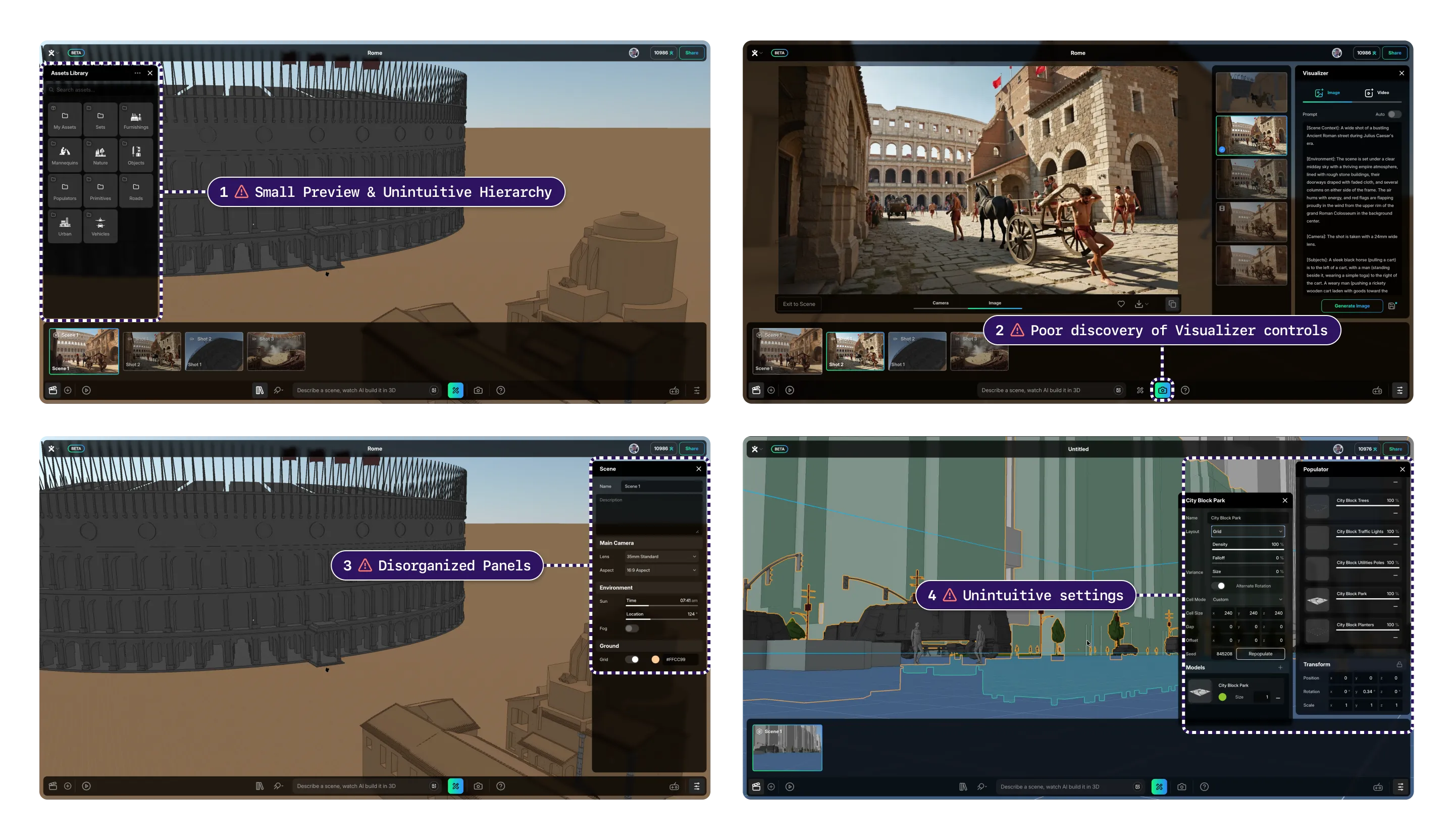
When I joined, the Intangible Studio had accumulated features and users would use the product and not return, because they found it hard to use the product.
Problem
Poor usability and low feature discoverability were hurting user retention and weekly active usage. Users struggled to find tools they needed and often didn’t realize capabilities existed.
Opportunity
A structural redesign that separates the product into distinct modes based on what the user is doing—making workflows clear, reducing cognitive load, and surfacing the right tools at the right time.
Solution
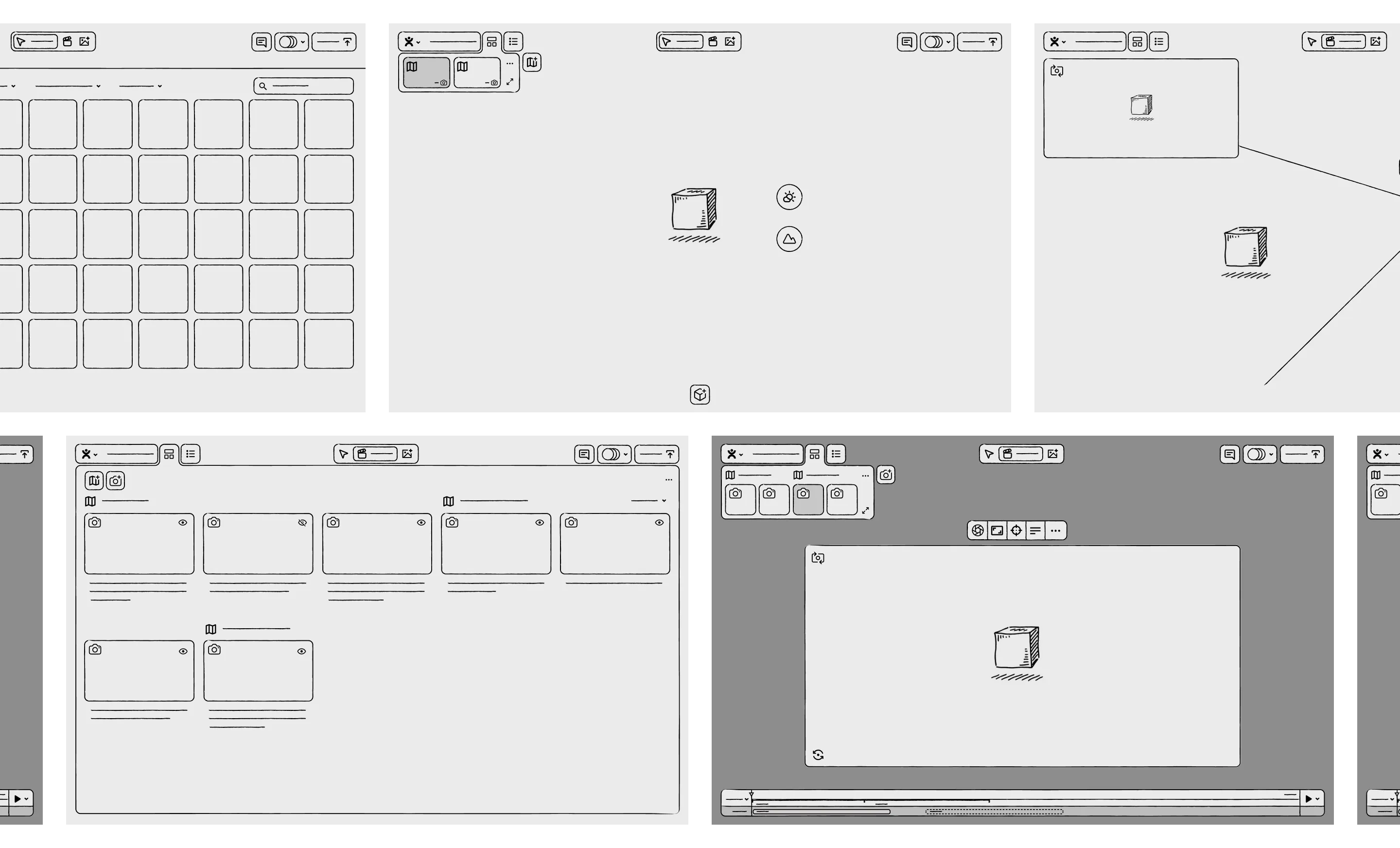
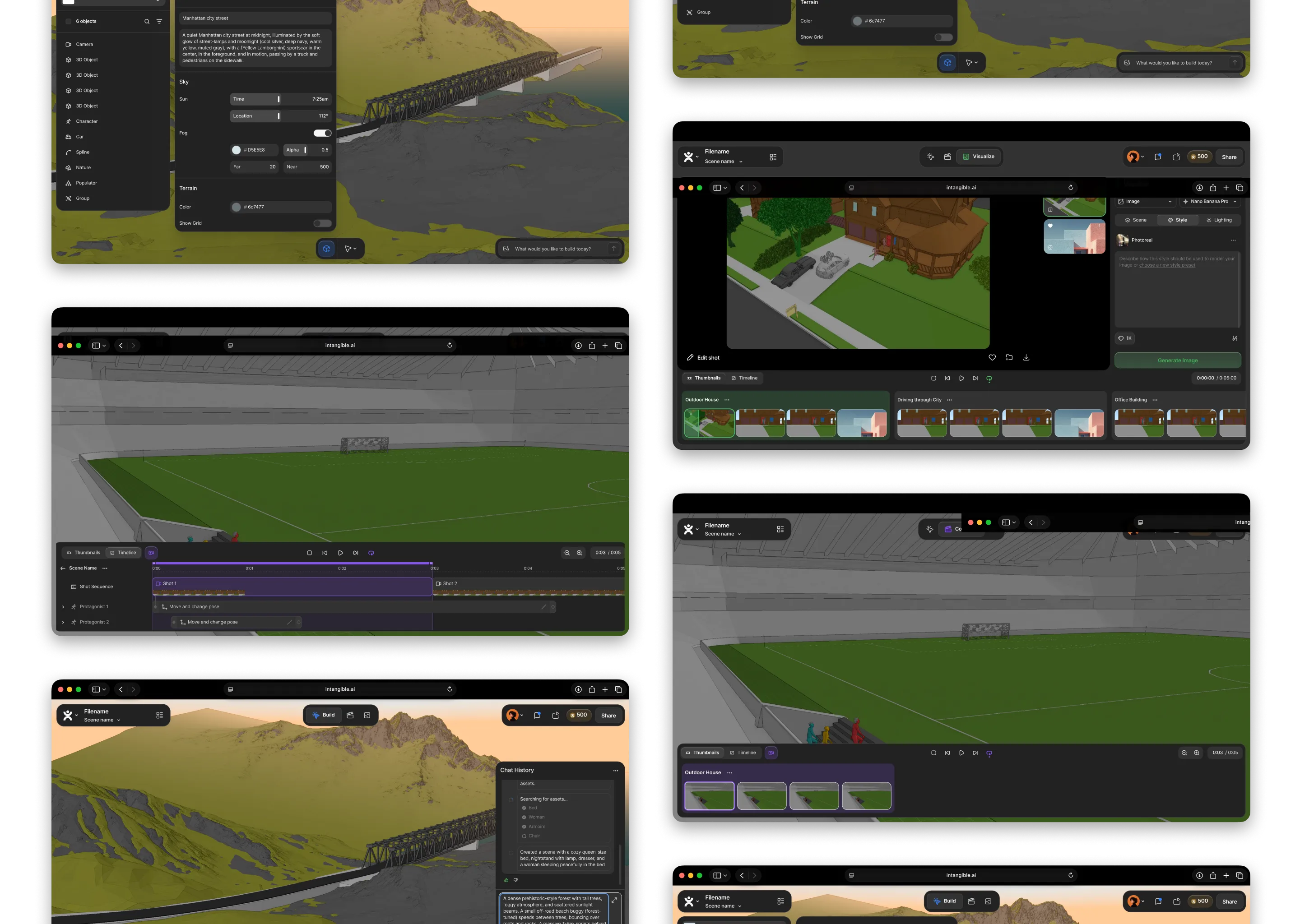
I designed a complete UI overhaul that separates the product into three distinct modes: Build for constructing 3D environments, Compose for animating scenes and sequencing camera shots, and Visualize for transforming those 3D scenes into AI-generated images and videos.
Each mode surfaces only the tools relevant to that task, reducing visual clutter and helping users build mental models of how the platform works. Navigation between modes is fluid and preserves context.
Impact
The redesign dramatically improved usability and feature discoverability. Users could now understand the platform’s workflow within minutes rather than hours.
We saw measurable increases in user retention and weekly active usage as users engaged with features they previously didn’t know existed.
Role
As Senior Product Designer, I owned the end-to-end redesign—from research and concept exploration through detailed interaction design and implementation support.
Team
I collaborated closely with the founding team, product leadership, and engineering to ensure the new architecture was both user-centered and technically feasible.